
gardens@dufferinpark.ca, or
sign up: our email list service (dufferingrovefriends),
or website forum.
For the basics, see
- Website & Privacy Policies
- How To Get Involved
- The Role of the Park
If you love gardening, you can pitch in with the community gardens at Dufferin Grove Park (both food and decorative plants), or get your own city allotment garden plot (from the City not in Dufferin Park) for a small fee.
All of Dufferin Grove Park's vegetable, native and flower gardens are community gardens. If you'd like to help keep them healthy and happy this summer or if you just want to get your hands dirty then leave a message at the rink house for the Jenny Cook of the park staff. 416-392-0913.

Park Gardens (Main)
Scanning...
on this page:
Park Gardens | Latest News | Related Links
WelcomeWelcome to park gardens. If you want to participate in gardening at the park or in the maintenance of this website, or if you have any questions or comments, please contact gardens@dufferinpark.ca. In spring you can help seed, water, turn soil, then it is weeding time and finally harvest time! |
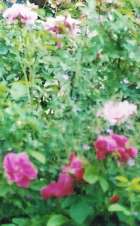
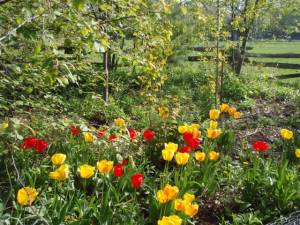
Dufferin Grove Park Gardens in spring:posted April 23, 2008 See the new photo gallery. Better still, come to the park and smell the roses! |
From the September 2009 Newsletter:
It’s been 17 years (1992) since the Parks maintenance staff removed the last flower gardens from the park, citing budget pressures. The following year, playground parent Anne Shaddick worked with kids and other parents to dig and plant the first little community garden near the playground. The Parks Department supervisor at that time, Carol Cormier, contributed some flats of flowering annuals from the High Park greenhouse. By the time Mayor June Rowlands came to officially “open” the new sandpit adventure play area in July 1993, the City TV cameraman was able to pan across a bright display of flowers for the newscast of the opening event.
Since then there has been a lot of neighbourhood planting in the park. High School teacher Rob Rennick planned and planted the first perennial bed near the rink. Children’s writer Margie Rutledge supervised “gangster” youth to plant vegetables and herbs as well as flowers, near the first bake oven. The Canada Trust “Friends of the Environment” Foundation donated funds to plant native-species gardens near the sandpit and in the Garrison Creek hollow by Dufferin Street. Landscaper and artist Gene Threndyle befriended the park around that time, and helped out with those gardens for many years (still does). He planted many of the trees and created the marsh area with its fountain near Dufferin Street (which he’s currently rebuilding).
The gardens near the sandpit didn’t last – too many little feet played on top of the delicate wood-flowers, and the Norway Maples tunneled up with their roots and stole all the groundwater. But the natives-species gardens and “tree nurseries” elsewhere in the park flourished, so that small plants are now tall trees and bushes.
The neighbourhood gardener who worked the hardest in the park, by a country mile, was retired steelworker Arie Kamp. Arie was born in Holland, apparently with a big green thumb. He remembers growing flowers in his own plot when he was twelve. When Arie discovered the gardening activities at Dufferin Grove Park in 1994, he got to work.
It turned out that one of Arie’s hobbies was collecting seeds from any garden that was near enough to the sidewalk that he could pick seeds from the best specimens. Over the course of ten years, Arie constantly dug and seeded and transplanted and added new garden beds to Dufferin Grove, often starting work as the first light of dawn came into the park (4.30 a.m. in early summer). Park staff had a hard time keeping up with his plans, both at Dufferin Grove and at some of the other parks where he also got involved. He planted California poppies and Shasta daisies and Sweet William and cosmos and many other beautiful flowers (and morning glories all over the chain link fence of the rink pad). Dufferin Grove became a favourite evening stroll for people in the neighbourhood, enjoying the colour and wonderful variety in the various flowerbeds. In 1997, when then-Lieutenant-Governor Hilary Weston arranged to visit the park, she presented Arie with an “Unsung Hero” award for his work.
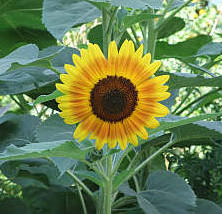
When Arie turned 80, he began to reduce his hours of park gardening to increase his chess time and help people with their home gardens. Now his main activity at Dufferin Grove is to cover the smaller park bake-oven with morning glories and surround it with sunflowers, so that people can hardly see there’s an oven under the mass of flowers. Some of Arie’s flowerbeds have been returned to sod (no one else could ever keep up the number of gardens that Arie planted). A few more of the flower gardens will be “down-sized” this fall. But Arie’s influence continues to manifest all over the park, because of all the seeds he introduced there. Sunflowers, morning glories, and cosmos continue to self-seed, so that by late August there’s colour everywhere, along fences, growing up out of the cracks in the rink house concrete, around the ovens, in the native-species gardens.
Around the time Arie began to reduce his gardening hours, park program staff Caitlin Shea and Jenny Cook and Anna Bekerman started working with other neighbourhood volunteers to grow vegetables and flowers near the rink house. Annick Mitchell and her son Jake tried out many different types of vegetable seeds in the garden they tended. Anna, Jenny and the garden volunteers laid out and dug a new children’s garden to increase the supply of pizza-day vegetables for kids to pick. Anna welcomed school classes and worked alongside them as she taught them about growing plants, making compost, and harvesting (and eating!) what they helped to grow.
This August Anna married and moved to New York. Caitlin moved to Cleveland a few years ago, and Jenny is a part-time farmer and an environmentalist as well as a park baker and cook, with limited time to fit gardening volunteers into her schedule. This is a time of considerable program staff turn-over. There’s too much garden space for the current volunteers to look after, so a new chapter in the park garden story may be starting. (All contributions to this new phase are welcome!)
One possibility is to copy the Christie Pits community gardens, on a smaller scale, and invite some garden-less people and groups (e.g. school groups like the St.Mary’s environment club) to have their own plots in the existing fenced food gardens. Other volunteer gardeners may prefer to keep on contributing their work to the community garden areas.
In the case of the native-species gardens and tree nurseries – and those fence-line flowers and plants which have turned into farm-style hedgerows – the ecology that has developed may only need a little tweaking. Areas that are more weed than flowers may need to shrink or be grassed over. The towering sunflowers crowding the park walkway from Dufferin Street near the marsh garden need to be cut back. And so on.
This fall is a good time for park users to talk to the park program staff about park gardening ideas – look for the staff in the park or email them at staff@dufferinpark.ca.


Shah says that amaranth tastes delicious when the young leaves are chopped up and cooked in a little oil with pepper, turmeric, and salt. The leaves shrink just like spinach, and the water that comes out when the plant is heated needs to be cooked off or squeezed out. If you add some shrimp, says Shah, it makes a whole meal.
From the May 2009 Newsletter:
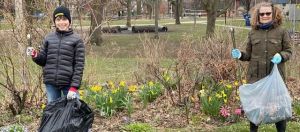
Spring is here! If you want to find your green thumb, contact garden coordinator Anna Bekerman at gardens@dufferinpark.ca or call the park at 416 392-0913 and leave Anna a message. Everyone welcome! The garden club meets at the park food gardens on Wednesdays at noon and Sundays at 11 a.m. Everything is happening so fast now, that times may change – check with Anna before coming out. The garden activities are digging, planting, attending to the excellent compost bins, learning and swapping plant lore, and (later) harvesting vegetables for the family pizza days, the park cafés and community dinners. Volunteer gardeners eat free, of course.
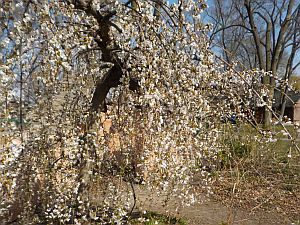
The cherry trees and the serviceberry bush are in bloom, the strawberry plants are setting fruit, the sweet peas have sprouted – it’s a wonderful time to be gardening.
From the April 2009 Newsletter:
Spring is coming! If you want to find your green thumb, contact garden coordinator Anna Bekerman at gardens@dufferinpark.ca or call the park at 416 392-0913 and leave Anna a message. Everyone welcome! The garden club meets at the park food gardens on Sunday afternoons, digging, planting, attending to the excellent compost bins, learning and swapping plant lore, and (later) harvesting vegetables for the family pizza days, the park cafés and community dinners. Volunteer gardeners eat free, of course.

Spring is coming! If you want to find your green thumb, contact garden coordinator Anna Bekerman at gardens@dufferinpark.ca or call the park at 416 392-0913 and leave Anna a message. Everyone welcome! The garden club meets on Sundays at 11 a.m. and on Wednesdays at noon, digging, planting, attending to the excellent compost bins, learning and swapping plant lore, and harvesting the bounty for the family pizza days, the park cafés and community dinners. Volunteer gardeners eat free, of course.
From the March 2009 Newsletter:
From Anna Bekerman, Dufferin Grove garden coordinator: the garden volunteers have begun the task of starting seedlings inside the rink house. Spring is coming! If you want to find your green thumb, contact Anna at gardens@dufferinpark.ca or call the park at 416 392-0913 and leave Anna a message. Last season the garden club got together on Saturday afternoons, digging, planting, attending to the excellent compost bins, learning and swapping plant lore, and then, a bit later, harvesting the bounty from the vegetable gardens. Food that’s grown in the park goes to the park cooks for the park cafés and community dinners. Kids get to pick cherry tomatoes, peppers and herbs to put on their bake-oven pizzas. The flowers and naturalized areas add pleasure to park promenades.
Community gardens have been part of the park since 1993, when kids and parents at the playground planted the first little flowerbed around the corner from the brand-new sandpit. The park gardens change as the gardeners change. And garden volunteers get to go home with a few of the just-picked lettuces and the shiniest peppers – plus here and there a fresh-baked loaf of park-oven bread or cinnamon buns. Part of sharing labour is sharing food – an exchange that may increase in importance in these difficult economic times.
Related Websitesposted February 24, 2005 The Toronto Foodshare website has several pages about community gardening, such as:
Green Thumbs Growing Things Website posted March 25, 2004 From Green Thumbs website: Children's gardening and natural science activities are important, especially for children in our neighbourhood [Riverdale] who live in apartments with little access to green space. It's also about celebrating nature's variety and healthy diversity, which includes us humans who've come from all over the world to this downtown Toronto neighbourhood. General Interest Websites
|
Gardening StoriesThe Tomatoes of Bureaucracyposted March 25, 2004 [park gardening versus bureaucracy] Ever since 1974, the city has rented out allotment gardens. When we moved back in 1980 we put our name down. There were none left, but they said they'd call us if there's a cancellation. And there was one. We put the kids in the car and drove up to look. There it was, number 22: one plot in a tract of thirty-six, bounded on the east by a four-lane road...Read more >> Garden Stories from our newsletters, 2000-2002[September 2000] Gardens: This year the plentiful rain started the gardens off well, and of course the efforts of Arie Kemp yielded wonderful results, as he grew the most striking flowers from seed all over the park. Arie collects seed from the best stands of flowers that he can discover on his bike rides around the city. Read more >> Newspaper Clippingsposted October 9, 2004 Now Magazine Turning Tomates Into Sauce By Kyla Dixon-Muir. Mentions Dufferin Grove Park Garden, and our own work with bureaucracy. |